Farm & Ranch Fence Installation in Torrington, CT
Cedar post-and-rail, no-climb horse fence, high-tensile wire, and split-rail perimeter — built for working farms and equestrian properties across the Litchfield Hills.
Get a Free Estimate (860) 606-3757Farm & Ranch Fencing in Torrington, CT
Farm and ranch fence has different priorities than residential — it covers more linear footage, lives in rougher terrain, contains and protects livestock around the clock, and has to handle decades of weather and animal pressure on a budget that can't run premium materials across every line. Torrington Fence Builders installs farm and ranch fence across Torrington and Litchfield County for working horse properties, hobby farms, dairy and beef operations, sheep and goat enclosures, and rural homesteads. We work in cedar post-and-rail, pressure-treated post-and-board, no-climb woven wire, high-tensile electric and barrier wire, split-rail, and combination fence — the right system for the species, the terrain, and the budget.
Fence Types for Litchfield County Farms
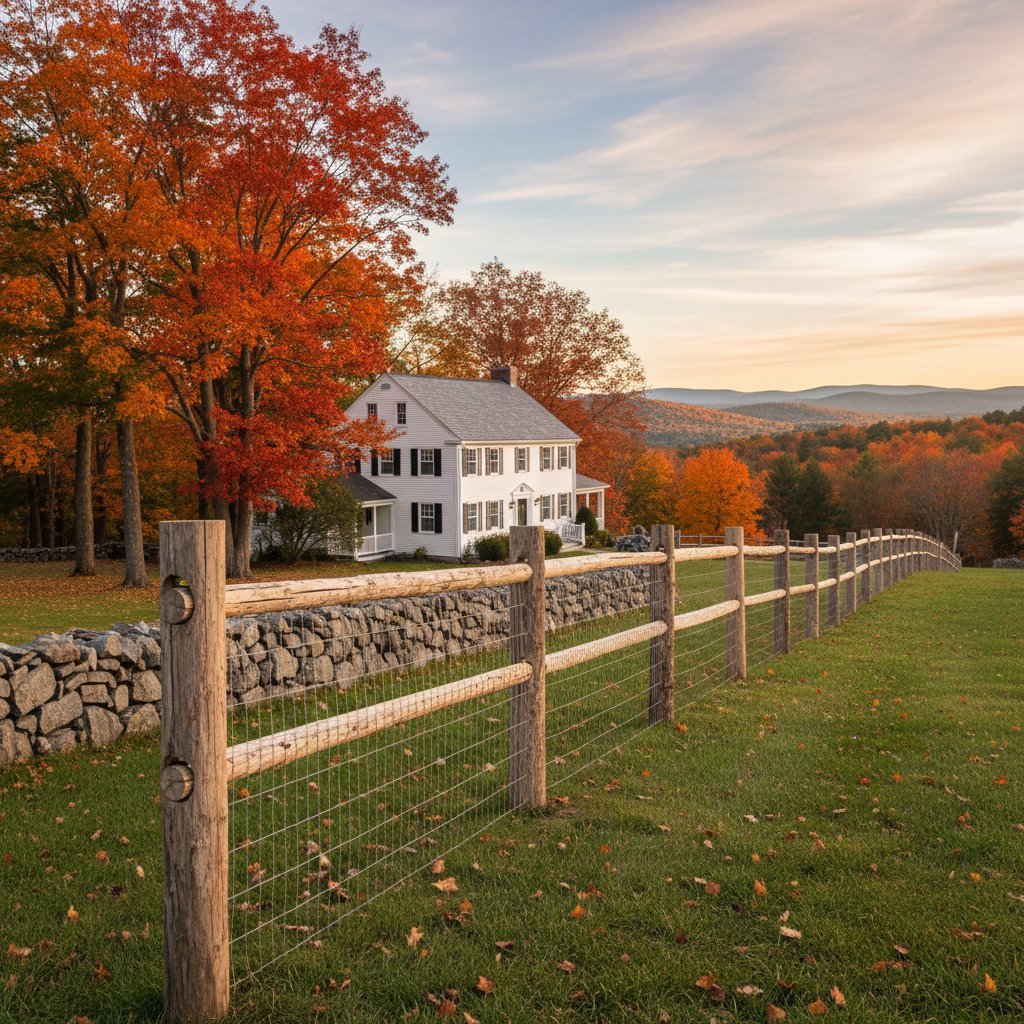
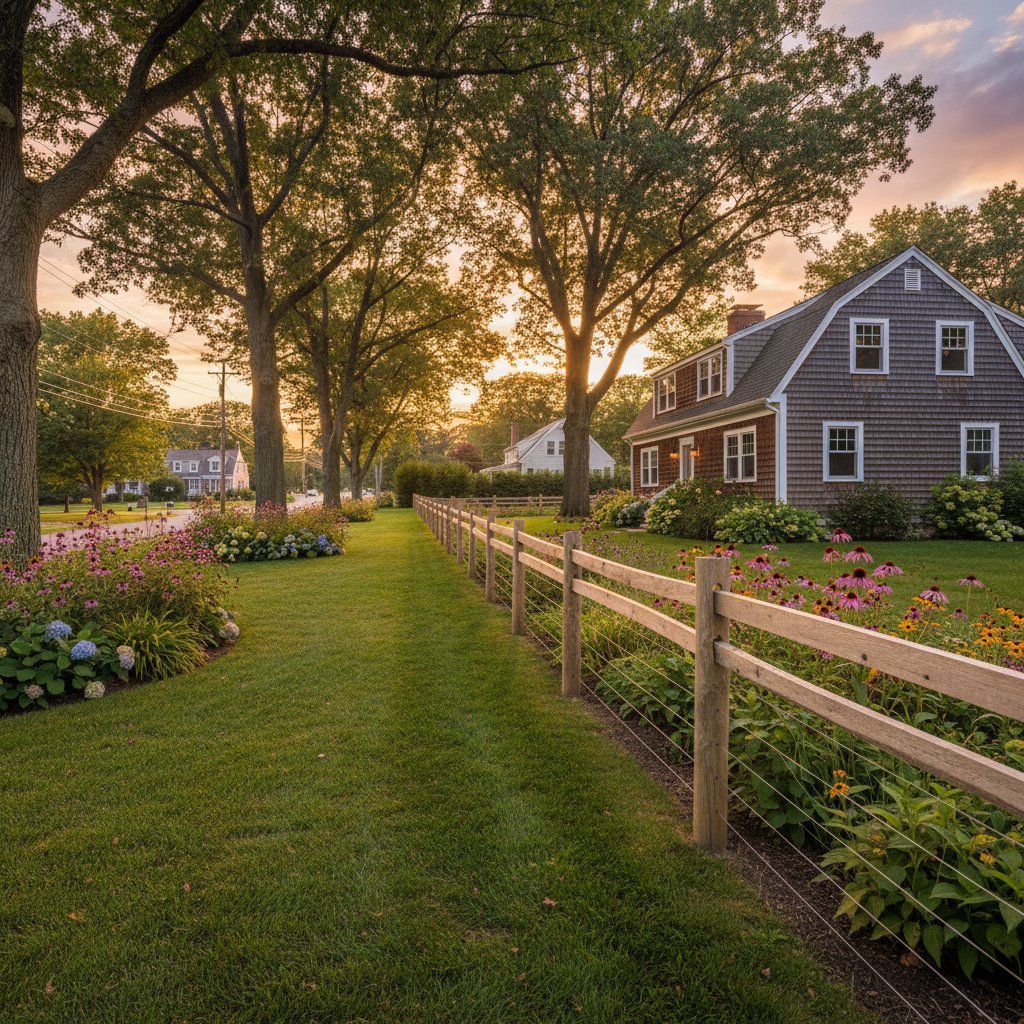
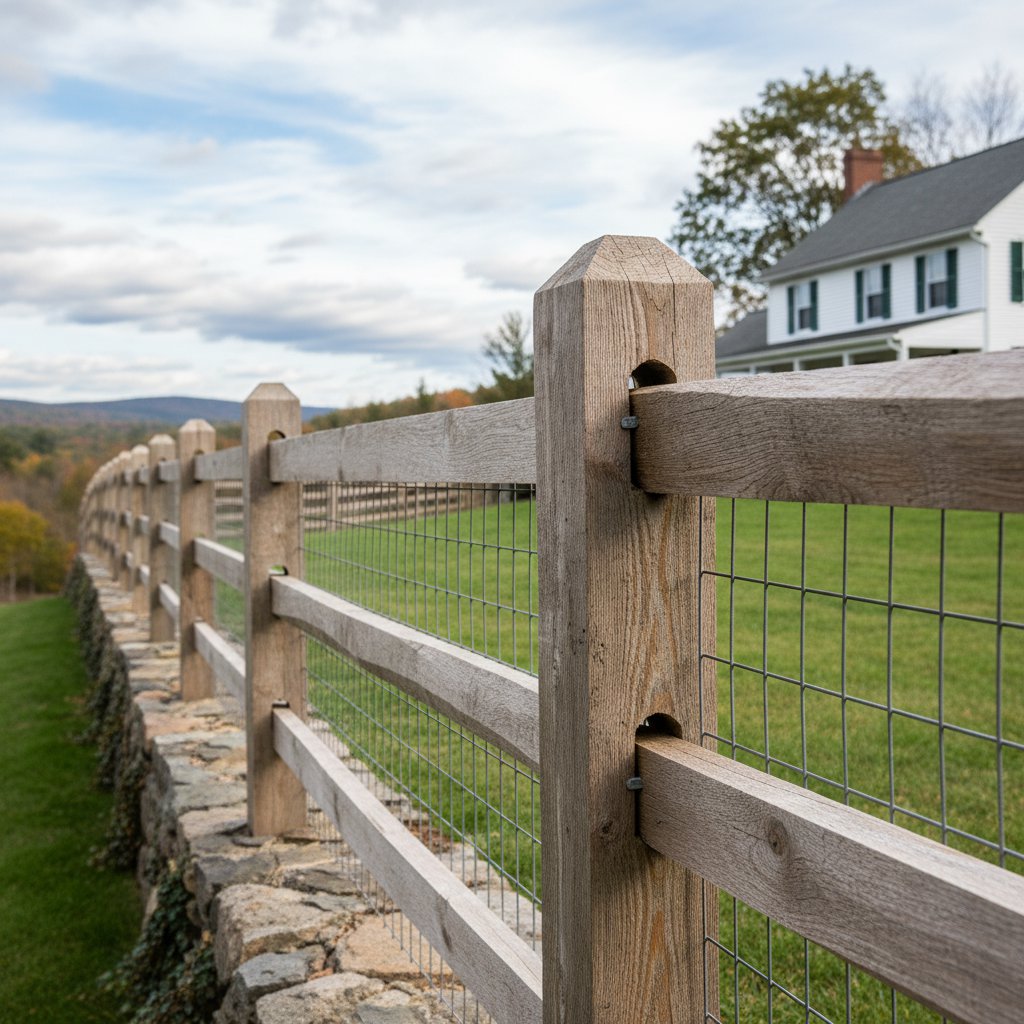
Cedar post-and-rail in three- and four-rail configurations is the classic Litchfield County horse fence — visible to livestock, attractive from the road, and traditional to the New England agricultural landscape. Pressure-treated post-and-board is the budget alternative with similar performance, often painted or stained to match a property's existing structures. No-climb woven wire fence (typically 2x4-inch mesh) is the standard interior fence for horses to prevent hooves and legs from getting through, and it works equally well for sheep, goats, and small livestock. Combination fence — wood post-and-rail with no-climb wire on the inside face — is the gold standard for high-value horse property: visible from a distance, but with the wire backing that prevents cribbing and contains foals. High-tensile wire (smooth or barbed) covers larger acreage perimeters where cost-per-foot matters and the livestock are cattle or beef. Split-rail in cedar or locust suits decorative front-property runs and rural property lines that don't need to actively contain anything.


Free Farm Fence Estimate
Limited Slots Available This Month!
Posts, Wire, and Connecticut Frost
Farm fence posts run the full range — pressure-treated 4x4 and 6x6 cedar or locust on rail fence, T-posts on woven and high-tensile wire runs, and heavier corner and brace posts wherever the fence changes direction or crosses grade. All wood posts need to clear Connecticut's 42-inch frost line for long-term stability, and corner and gate post footings get oversized concrete because they take the tension load of the entire run. We use class-3 galvanized woven wire (heavier zinc coating than standard galvanized) for woven fence in Northwest Connecticut — the salt and humidity here eats lighter coatings within five years. High-tensile wire is properly tensioned with in-line tensioners and braced at every corner with the right H-brace or diagonal configuration. These details determine whether a farm fence holds up for thirty years or starts sagging in five.
Layout, Gates, and Working with the Terrain
Litchfield County terrain runs from the gentle pasture in lower elevations around Goshen and Litchfield up into hill country with significant grade, ledge rock close to the surface, and stone walls running along old property lines. Fence layout needs to work with that — lines along contours where possible, post setting that adapts to ledge (wedged-in concrete or set against existing stone where appropriate), and brace configurations that handle the tension on long downhill runs. Gates get planned around equipment access, livestock movement, and how the property is actually worked: 12- or 16-foot pasture gates for tractor and round-bale access, 4-foot pedestrian gates with proper latches at handling areas, and double gates between paddocks for livestock movement. We've worked enough farms across Litchfield County to know the questions to ask before we start measuring rolls of wire.
Farm Fence Installations Across Litchfield County
Signs Your Farm Fence Needs Work
Watch for these issues, especially after winter and through grazing season.
Sagging Wire and Loose Tension
High-tensile and woven wire that has lost tension lets livestock test it. Re-tensioning works for moderate sag; heavily compromised wire needs replacement before an animal goes through.
Heaved or Leaning Posts
Frost-heaved corner posts and brace posts compromise the entire fence run, since they hold the tension. Catching a heaved corner early lets you reset before the line itself goes slack.
Rotted Bottoms on Wood Posts
Wood posts wick moisture from the ground over time, especially older non-pressure-treated posts. A post that wiggles when pushed is at the end of its life and needs replacement before the fence comes down with it.
Storm Damage and Tree Drops
Falling limbs and full trees take out fence runs every storm season in Litchfield County. Sectional repair with matched materials gets the line back up without re-fencing the whole property.
How We Install Farm Fence
A scoped process from layout walk through final stretch.
Property Walk and Scope
We walk the property with you, identify livestock requirements, terrain considerations, gate locations, and stone walls or other features that affect layout. Estimate is itemized by run.
Layout, Permits, and Utility Marking
Permits are pulled where required — most rural farm fence in Litchfield County doesn't need permits, but property lines and wetlands proximity sometimes trigger review. CT 811 is called before digging.
Corner and Brace Setting
Corner posts and braces go in first, set in concrete below frost depth, since the entire fence's tension depends on them. Line posts and wire follow once corners have cured.
Wire, Gates, and Final Tension
Wire is stretched and tensioned correctly, gates hung level with hardware sized to the gate's weight and use, and the property cleared of materials before we leave.
What Our Clients Say
"Cedar board-on-board around the backyard off East Main Street. Crew worked through a stretch of late October rain without slowing down and set every post in concrete deep enough to clear our frost line. Two winters in and nothing has shifted — gates still latch clean."

Farm Fence Estimates in Torrington — Call Today
Contact Torrington Fence Builders at (860) 606-3757 for a free estimate on farm and ranch fence installation in Torrington or anywhere across Litchfield County.